When you buy view acreage in Tetonia, it is easy to focus on the skyline and miss the systems that make a property usable year-round. A beautiful parcel can still come with open questions about legal access, winter plowing, utility extensions, septic feasibility, and where you can actually place a home. If you want to buy with confidence, the key is to look past the view and understand how the land functions in real life. Let’s dive in.
Why Tetonia acreage needs deeper due diligence
In Tetonia, scenic value and development risk often sit side by side. A parcel may offer striking views, but that does not automatically mean it has simple access, ready utilities, or an approved building site.
Teton County’s land development code regulates access, shared driveways, utility easements, wildlife habitat, ridgelines, steep slopes, grading, and septic-related testing. Inside city limits, the City of Tetonia also plays a role in water utilities, sanitary sewer, and snow removal on main roadways.
For you as a buyer, that means the real question is not just, “Do I like this land?” It is also, “Can I reach it, serve it, and build on it without major surprises?”
Access comes first
A great view does not help much if access is unclear, limited, or difficult to maintain in winter. Before you fall in love with a parcel, confirm how you legally get to it and what that access requires.
Teton County requires new building or site improvements to comply with its driveway or right-of-way access permit process. The county also generally limits parcels to one driveway unless another arrangement is approved.
Public, private, or shared access
One of the first things to verify is whether the road or driveway is public, private, or shared. That distinction affects who maintains the route, who pays for repairs, and who handles snow removal.
If the property uses a shared-access driveway, Teton County requires a recorded easement and a joint maintenance agreement. That agreement should define responsibility for upkeep, which can be especially important when snow, drifting, and seasonal wear become part of daily life.
County roads and expectations
A public right-of-way does not automatically mean the county will build or maintain a road for vehicle traffic. Teton County’s road guidelines state that adopting road standards does not create a duty to upgrade older roads or bring them to current standards.
That matters on rural roads and older subdivision roads. You will want to know whether the road serving the parcel is built to county standards, who maintains it now, and whether that arrangement is documented.
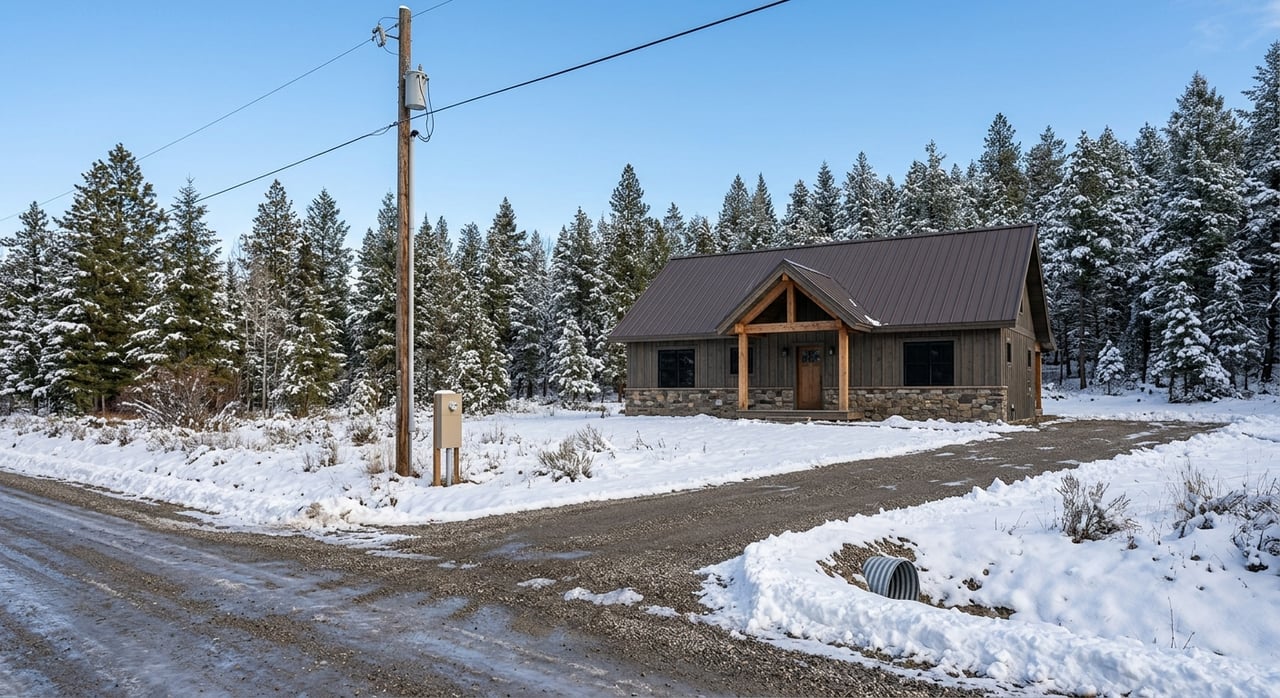
Winter plowing and snow storage
Snow planning deserves just as much attention as legal access. The City of Tetonia says it handles snow removal on its main roadways, while Teton County uses its road and bridge fund for road maintenance, snow removal, and road construction.
Even so, buyers should verify who plows the driveway itself, who clears drifts, and whether there is enough room to store snow on the lot or within a recorded easement. On some view parcels, the drive corridor can be narrow, and snow storage can become a practical issue fast.
Utilities are not always ready
A common mistake with land is assuming nearby infrastructure means easy service. In Tetonia, “power nearby” is not the same as “power ready.”
Teton County requires electric and telecommunications service to each lot in new subdivisions, and all new electric and telecommunications lines must be underground. The county also requires utility easements where utilities are not located inside a dedicated road right-of-way.
Easements matter more than buyers expect
Utility service often depends on whether the parcel has the right easements in place. Teton County requires at least 20-foot easements for water lines, sanitary sewer lines, stormwater drainage, irrigation ditches, and pipelines, and at least 15 feet for power lines, telephone lines, and other utilities.
If those easements are missing, too narrow, or poorly located, extending service can become more complicated. This is one reason raw land can require more upfront investigation than a platted lot.
Electric service and site planning
Fall River Electric’s service requirements say the service location should appear on a site plan. For subdivisions, an approved plat is needed before service construction can be scheduled.
The member is responsible for providing service equipment and access, while the co-op installs the transformer, meter, and service drop or lateral where appropriate. If you are buying acreage with plans to build, it helps to confirm early what is already in place and what still needs to be designed or approved.
Water and wastewater can define buildability
Water and sewer questions often shape whether a parcel is practical to build on. The answer depends in part on whether the property is inside the City of Tetonia or outside city service.
Inside city boundaries, the city provides water utilities. City code also requires parcels improved for occupancy to connect to the public sanitary sewer system, with the owner responsible for connection costs.
Outside city limits
Outside city service, water and wastewater usually have to be solved parcel by parcel. Idaho law requires a permit and a licensed well driller before a well is drilled.
For septic, Eastern Idaho Public Health permits and inspects septic systems, and the Idaho Department of Environmental Quality notes that public health districts also conduct site evaluations for septic suitability. That means septic approval is not something to assume based on appearance alone.
Septic feasibility and soils
Teton County’s septic review process asks for percolation, groundwater, and soil tests. The county’s subdivision code also says that if public sewer is within 500 feet and reasonably available, development must apply to connect, and the applicant pays the cost of mains or capacity extension.
For buyers, the takeaway is simple: ground that looks dry is not automatically ground that will support an approved drainfield. Septic feasibility is a core part of buildability on acreage in this area.
Views can come with design limits
Some of Tetonia’s most attractive parcels also face the most development constraints. The same natural features that create dramatic views can trigger additional review for slopes, ridgelines, and habitat.
Teton County’s natural resource standards require site-plan review for development in mapped wildlife habitat and migration corridors. The code focuses on avoiding or mitigating impacts to indicator species and maintaining habitat connectivity, and it also calls for wildlife-friendly perimeter fencing.
Ridgelines and scenic corridors
Teton County’s ridgeline protection rule says physical development cannot breach ridgelines as viewed from state highways. If a ridge breach cannot be avoided, an applicant may need a visual resource analysis showing how the project will appear from scenic corridors and critical viewpoints.
That can affect where you place a home, how tall it can appear, and how the site is graded. On a premium view parcel, that can have a direct impact on design options.
Steep slopes and grading
Steep-slope rules also matter on view acreage. Teton County applies special standards to hillsides over 20%, prohibits physical development on natural slopes over 30% except for essential access or utilities when no alternative exists, and requires geotechnical work for grading and erosion control permits on slopes over 15%.
In practical terms, the most scenic homesite is not always the easiest or most cost-effective homesite. More grading, drainage planning, slope stabilization, or redesign may be needed to comply with county rules.
Raw land and subdivision lots are different
When you compare acreage options in Tetonia, it helps to separate raw land from platted subdivision lots. They may look similar on a map, but the due diligence can be very different.
Raw land often offers more flexibility on paper, but it may shift more of the work to you. Access, easements, utility extensions, septic testing, and road maintenance may all need to be solved individually.
What recorded documents can change
Platted lots may come with more recorded rules, but they can also offer more clarity. Roads, utilities, building constraints, and shared systems may already be identified in the plat package.
Teton County’s code says it does not nullify private agreements or covenants, and the county does not enforce them. So even if a parcel complies with zoning, recorded CC&Rs can still add meaningful rules that affect how you use the property.
Shared systems and maintenance obligations
Subdivision CC&Rs may require adequate septic tank maintenance consistent with public health and DEQ recommendations. Shared-access driveways must also have recorded easements and maintenance agreements.
For some smaller lots, the county can require community water or wastewater systems that meet public health and DEQ requirements. That makes the plat, notes, and recorded documents essential parts of your review.
Questions to answer before you close
Before you move forward on a Tetonia view parcel, it helps to ask a focused set of practical questions. These answers can reveal whether the land fits your goals and your budget.
- Is the access public, private, or shared?
- Who is responsible for road maintenance and plowing?
- Is there a recorded driveway easement or shared-access maintenance agreement?
- Are there gate restrictions or seasonal access concerns?
- Is electric service already at the lot, or will it require a site plan, plat review, underground extension, or utility easement?
- Is water provided by the City of Tetonia, a community system, or a private well?
- Has septic feasibility been evaluated with percolation, groundwater, and soil testing?
- Is the parcel located in mapped wildlife habitat, a migration corridor, a ridgeline protection area, or a steep-slope area?
- Do CC&Rs or plat notes add restrictions beyond county zoning?
The bottom line on Tetonia view acreage
In Tetonia, the view is often the easy part. The harder part is confirming year-round access, snow management, water, wastewater, utility service, and a buildable site that works within county rules and any recorded private covenants.
That is why strong land due diligence is usually less about aesthetics and more about legal, physical, and infrastructure questions. If you understand those details early, you can choose a parcel that fits both the lifestyle you want and the realities of building in Teton County.
If you are evaluating acreage in Tetonia or anywhere in Teton Valley, Harland Brothers Real Estate offers calm, experienced guidance shaped by local land knowledge and practical development insight.
FAQs
What should I verify about access on Tetonia acreage?
- Confirm whether access is public, private, or shared, and review any recorded driveway easement, maintenance agreement, gate restriction, and permit requirements tied to the parcel.
How is snow removal handled for property in Tetonia?
- The City of Tetonia handles snow removal on its main roadways, and Teton County uses its road and bridge fund for road maintenance and snow removal, but you should still verify who plows the driveway, clears drifts, and where snow can be stored.
Does a Tetonia lot with nearby power mean utilities are ready?
- No. Nearby power does not necessarily mean service is ready, since site planning, approved plats, underground extension requirements, access, and utility easements may still be needed.
How do water and sewer work for land in Tetonia?
- Inside the City of Tetonia, the city provides water utilities and improved parcels must connect to public sanitary sewer, while properties outside city service usually rely on private well and septic solutions subject to permitting and site review.
What septic testing matters for Tetonia acreage?
- Teton County’s review process calls for percolation, groundwater, and soil tests, and septic systems are permitted and inspected through Eastern Idaho Public Health.
Can views create building restrictions on Tetonia parcels?
- Yes. Ridgeline protection, steep-slope standards, and wildlife habitat review can affect where and how you build on a view parcel.
Do CC&Rs matter if a Tetonia property meets county zoning?
- Yes. Teton County does not nullify private covenants, so recorded CC&Rs and plat notes can still add rules that affect access, maintenance, utilities, and property use.