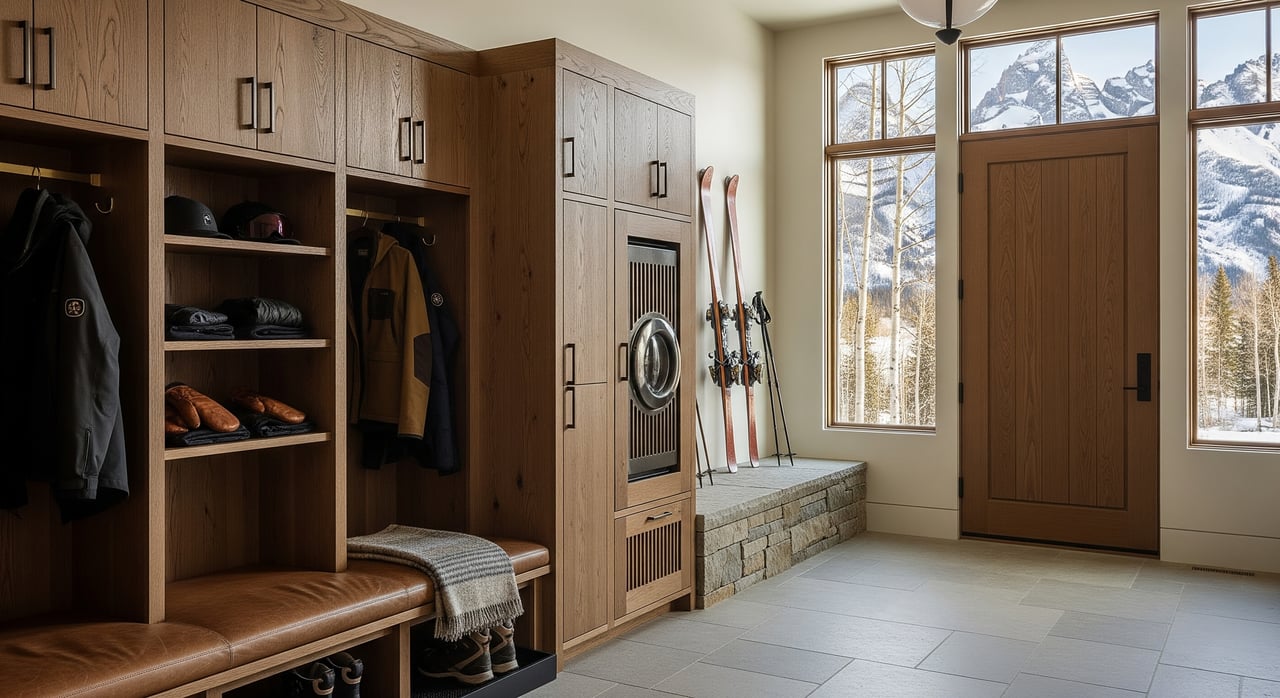
Winter in Teton Valley brings big days on skis, muddy spring trails and plenty of snow at your doorstep. If you are buying or updating a home here, the right entry spaces make daily life cleaner, warmer and easier. You want storage that tames wet gear, durable finishes that stand up to grit and a layout that stops drafts before they reach your living room. This guide shows you how to plan mudrooms, gear garages and heated entries that fit local climate, code and mountain routines. Let’s dive in.
Why these spaces matter in Teton Valley
Teton Valley sits at high elevation with cold winters and frequent snow. Local station normals for Driggs show January mean minimums around single digits and mild summers, which makes winter detailing a priority for comfort and durability. See the Driggs climate snapshot for context in the NOAA-based station normals.
Snow varies by site and elevation. County summaries report average annual snowfall that often ranges from roughly 70 to 110 inches depending on location and period. For perspective, review the Teton County snowfall snapshot and verify site specifics for your property.
Structural and energy rules guide good design. Idaho follows the 2018 IECC with state amendments, which affects insulation, doors and mechanical choices for heated entries and gear rooms. Check the current rules on the Idaho Energy Code site, and confirm ground snow loads with your building department using the University of Idaho’s Ground Snow Loads for Idaho.
Mudroom must-haves
A great mudroom acts as your daily transition zone. It catches meltwater and grit, keeps heat inside and organizes coats, boots and dog gear so you are in and out fast.
Layout and sizing basics
- Plan a clear 36 inch walkway in front of seating so multiple people can move without bottlenecks.
- Target bench height of 17 to 19 inches and 16 to 20 inches deep for easy boot changes. See dimensions in these mudroom bench guidelines.
- Give each person 16 to 24 inches of locker or hook width, with taller sections for ski shells and parkas.
Storage and drying that works
- Add outlets for boot dryers and a landing spot for liners, gloves and goggles. REI’s care tips recommend removing liners to dry and using gentle air, not high heat. Review winter gear storage advice.
- Use open shelves for airflow and removable trays under wet items to protect finishes.
Moisture control and ventilation
- Dry wet gear within 24 to 48 hours and keep indoor relative humidity ideally between 30 and 50 percent to reduce mold risk, per the EPA’s moisture guide.
- If the mudroom is enclosed and used for drying, consider a small dehumidifier or connect it to whole-home ventilation.
Durable, easy-clean materials
- Floors: tile, porcelain or stone handle meltwater and mud well and pair nicely with radiant heat. See floor and radiant compatibility in this overview of radiant floor options.
- Walls and cabinetry: use cleanable finishes like semi-gloss paint on lower walls and moisture-tolerant cabinetry.
- Create a defined wet zone with a draining mat or sloped tray near the door so snow can melt without spreading.
Gear garages that keep up
Your gear room or garage holds the bulky, wet and sometimes motorized items that a mudroom cannot. Plan for size, ventilation and surface durability.
Smart placement and separation
- Keep fuels and engines in a garage or dedicated ventilated area that is separated from living spaces per local code.
- If you need trailer access or ramps for snowmobiles or UTVs, size doors and turning space early so you are not boxed in later.
Surfaces that take a beating
- Sealed concrete or epoxy floors handle drips from wax and grease and are easy to clean.
- Rubber mats add traction and comfort where you step out of boots or maintain bikes.
Organization for four seasons
- Use vertical racks for skis and bikes to free up floor area.
- Include lockable cabinets for tools and smaller items and open shelves for high-airflow drying.
Heated entries and snow management
A small heated vestibule or entry keeps thresholds dry and cuts drafts. Outside, targeted snowmelt makes steps and short walks safer and lower maintenance.
Radiant floor choices inside
- Electric radiant mats or cables are cost-effective for small vestibules and remodels. Hydronic in-floor heat suits larger areas or whole-home systems. Compare pros and cons in this overview of electric radiant floors.
- Tile or stone on a radiant slab warms quickly and cleans easily.
Snowmelt for steps and short walks
- Automated snowmelt systems use temperature and moisture sensors and can be electric or hydronic. Learn how systems operate in this snowmelt systems primer.
- Costs vary by size and technology. Consumer sources report installed ranges that can span roughly the single to several tens of dollars per square foot, with hydronic usually higher. See a planning overview of heated driveway costs. For many homes, a portable heated mat on key steps is an economical alternative.
Door systems that block drafts
- A two-door vestibule creates a simple airlock. Use insulated exterior doors with quality weatherstripping and low-profile thresholds to limit infiltration and prevent trips.
Quick planning checklist
- Confirm ground and roof snow loads and permit needs with the local building department. Start with the University of Idaho’s ground snow load tables.
- Review current insulation and mechanical requirements on the Idaho Energy Code.
- Engage the right pros early: structural engineer for new gear garages or big spans, HVAC or plumbing contractor for hydronic heat, and a licensed electrician for radiant mats, boot-dryer circuits and snowmelt wiring.
- Map traffic flow from garage to kitchen or great room. Place benches and hooks where you naturally pause.
- Plan outlets near lockers for boot dryers and a dedicated spot for a dehumidifier if needed.
What this means for resale
Well-designed mudrooms, gear storage and heated entries signal that a home is truly ready for mountain life. Buyers notice clean thresholds, organized storage and durable finishes that stand up to snow and grit. These features add daily comfort and help protect interiors, which supports long-term value in a high-snow market like Teton Valley.
If you want help prioritizing upgrades before listing or want to target properties that already have these features dialed, reach out to Harland Brothers Real Estate. Our team pairs construction insight with local market knowledge so you can buy or sell with confidence.
FAQs
What is the biggest benefit of a mudroom in Teton Valley?
- It creates a thermal and dirt barrier that keeps meltwater and grit out of living spaces while giving you organized storage for daily gear.
How big should a two-person mudroom be?
- A compact 5 by 7 to 6 by 8 foot space can work, with a 17 to 19 inch high bench and about 36 inches of clear walkway for easy flow.
Do I need a heated entry or snowmelt system?
- Many homes benefit from a small radiant-heated vestibule or a heated mat at the door, while full snowmelt systems suit critical paths where shoveling or plowing is difficult.
What flooring stands up best to meltwater?
- Tile, porcelain or stone are top choices for wet entry zones and pair well with radiant heat for faster drying and easy cleaning.
How do I control humidity when drying gear?
- Dry items within 24 to 48 hours, aim for indoor relative humidity around 30 to 50 percent and use ventilation or a dehumidifier in enclosed gear rooms.
Do I need a permit to add a gear garage?
- Most additions trigger permits and structural review, especially in high-snow areas, so confirm ground snow loads and local requirements with the building department early.